Showing posts with label Analysis. Show all posts

Saturday, 20 December 2014

Mise-en-Scene Written Analysis - American Beauty


Mise-en-Scene Written Analysis

American Beauty

Colour:
The colour of the woman's clothing on the left represents a link between the situation with in the scene and the Mise-en-Scene that is present. The character appears to be wearing blue which can symbolise depression. The type of clothing is formal and therefore shows that she has responsibility. Additionally, the layout of the table such as the cloths can suggest that the character prepared the table and the meal. This represents the character as inferior as the character is to follow a stereotypical domestic housewife lifestyle by preparing the family meal as well as dressing to please the family, especially the husband. However, the clothing of the characters are all dark in colour which could represent that there is a tension with in the family. This could suggest that they are of less importance in this specific scene and they are not meant to be focused on. The daughter in the centre of the image however is wearing slightly brighter coloured clothing compared to her parents, which suggests that the focus of the scene is on her. Bright colours could suggest she is of higher importance in this specific scene and that we are meant to give our attention to her. The red flowers in the middle of the table may suggest that the young girl has poor mental state. This is because red is a colour that is often associated with evil, anger or pain. The grey colour of the background represents a dull theme and or could also emphasise the importance of the young female character as the colours of her and the background are separate. 
 
Facial Expressions:
Facial expressions of a character expresses how they are feeling. As there are but three characters in the still image, three different facial expressions are portrayed. The mother in the picture appears to be very uncomfortable as she has a blank, but slightly aggravated facial expression as she stares at the father/husband. This shows that there is tension in the marital relationship. The daughter in the centre of the image appears having an agitated and aggravated facial expression, similarly to the mother. The character is directing herself right back at the father again which emphasises that she might be involved in the tension with in the family. In comparison to the female characters, the father character appears to have a joyous facial expression. This is due to the character smiling which could suggest laughter. This emphasises that the character is either trying to lighten the mood with laughter and fun, or is not taking the situation revolved around the image seriously.
 
Framing:
The characters are all within the frame and are clearly displayed in the image. All the characters are sat around the same table. The table consists of the mother positioned on the far left, the daughter in the centre and the father on the far right.  This gives us the idea that their is discomfort between the family and that the girl is caught in the middle of arguing between the parents. A reason to why the characters have such a large distance from each other is probably because the young female character appears sinister and mischievous, therefore the parents are aware of this and attempt to keep their distance from their own daughter. This links to the idea of there being tension within the family.
 
Lighting:
The lighting used in the image highlights which characters are of high importance. The daughter, who is positioned in the centre of the frame is clearly being lit up by the candles placed in front of her. The lighting suggests that she is of most importance and is the soul of the family. Whereas the parents, who are positioned to the far left and right of the image are sat within the darkness which emphasises the negativity of the relationship. The darkened lighting surrounding the parents suggests that they are of less importance compared to their daughter. Again, this shows that the only light of the image is the candles reflecting the light upon the daughter making her of high importance.
 
Body Language and Posture:
Each character in this image posses their own body features/posture. The young girl in the middle has her elbows on the table may suggest that she has bad manors, especially since she is currently at the dinner table eating. In contrast to this, both of her parent's arms are positioned lower down with their elbows avoiding contact with the top of the table. This suggests that they have much better manors that their daughter. Both the daughter and her father are avoiding eye contact with the mother which suggests that she is emotionally rejected by the rest of the family. Finally, in terms of body posture, he father's fists are clenched. This is suggestive of the idea that the father is not presenting his true emotion upon his face. He appears to smiling ad enjoying himself yet his hands would suggest anger or rage.

Props:
There are only a few essential props within this scene. The first is the wine bottle. It is located very close to the women which may suggest that she is a heavy drinker. This may be due to a failing relationship with her husband or the fact that it appears her daughter is rejecting her. The positioning of the flowers in front of the young girl give us the idea that she is the only life on the table but requires looking after. A lot of the items on the table appear to be crystal or glass, this suggests that the family is likely wealthy. 

Hair and Make-Up:
The hair and makeup of the mother suggests that she may spend a considerable amount of time on making her self appealing. This can be identified by he short haircut and contrasting makeup. In contrast to this is the daughter in the middle. She has a very simple hairstyle (pony tail) and very simple makeup. This may suggest innocence however the bright red lip stick is quite sinister. The fact that she is wearing makeup at all may suggest that she is to act or at least appear as an adult. The man has a short and formal haircut which h may suggest that he is a business man. It is clear that his hair is receding which makes it clear that he may be under a lot of stress either due to his job or his family.
Clothing / Costume:
The final factor is clothing. Both of the parents are wearing very formal, plain and colourless clothing. Even though this may suggest that they are boring people or that they live a dull life, it may also hint at the idea that they possess a high quality of wealth. The clothing of the young girl is typical of a child. It is brightly coloured and very casual, especially compared to her parents. 

Tuesday, 30 September 2014

Gender in TV Drama


Gender in TV Drama

Stereotype of Women:

TV dramas are always thought to be a female-viewer-attracted industry, especially for soap operas. However, the same as other types of television programs, TV dramas represent and reinforce the majority’s ideology of modern western culture. The role of a female character is to make the male characters appear more important to the series.
 
It is also interesting to see how female character’s professional achievements correlate with their physical appearance. In the so-called nerdy sitcom the Big Bang Theory, the only scientific illiteracy main character is a beautiful blonde named Penny. On the contrary, another minor female role is Leslie, who is also a highly educated scientist, and is portrayed as not attractive at all. This stereotype is used in TV dramas to express that the highly intelligent women are represented as inferior whereas the more sexualised, and typically blonde, characters are considered to have a more important role in the drama.
 
Another example is the show about advertising industry. Betty, a full-time housewife is shown as an elegant blonde (blonde again!) with a nice figure; Peggy, an ambitious secretary who later becomes a copywriter, is much less attractive. Both characters are from The Mad Men.


Here draws the conclusion that female characters in TV dramas are either represented as pretty or intelligent; successful either in family life or workplace—there is hardly any way to accomplish both.

 
Female characters’ professional lives are usually ignored, or more often, they are portrayed as housewives who takes care of children and family chores every day, but not ambitious at all in building a career. Even if women do work, they are often shown on TV in traditional feminine jobs such as teachers, secretaries and nurses, which kind of professions all require patience, carefulness, warm-heartedness. For the relatively small amount of women who try to further their professional lives, in which they do fail a majority of the time For example Samantha from EastEnders left her husband to pursue a career in modelling, but was unsuccessful.
In this way, female characters are often punished for pursuing their own careers at the expense of their boyfriends or husbands. Of course there are also women in power in TV dramas, though the number is limited. However, these professional successful women are less favoured than housewives; furthermore, women in power are usually portrayed to be villainous, which indicates the discouragement of being such type of female.

 
Stereotype of Men:

The first stereotype of men is that they should appear to be strong and powerful, mentally and physically. Males appear to be the elements that are the face of TV drama as they are seen as an important role due to their abilities.
An example of a strong male character is The Doctor from Doctor Who. His character is presented as strong due to his vast knowledge of planets, strategies and monsters to face up against. Although he cannot resist travelling with a female companion. This makes his character seem more important as he has an inferior with him which makes him the superior.
 

Whereas a countertype to this is Ian Beale from EastEnders. This is because his character can be perceived as weak due to his vulnerability due to recent narratives and can easily be manipulated by other characters.


Another stereotype is that men are obsessed with sex. This can be interpreted due to immaturity of a small majority of the male population. This stereotype begins with the idea that teenagers become sex crazed and become obsessed. Whereas when they age, this craze is not so effective.


An example of a sex crazed character is Jay from The Inbetweeners. The character always talks fantasy with his group of friends that he has do sexual things with other people that just simply are not true. Eventually, his act becomes transparent and his friends do not take an interest in what he has to say a majority of the time.


The countertype to this is Sheldon Cooper of the Big Bang Theory. Who has no interest in sexual actions or sexual intercourse. This character prefers to focus on his scientific career. Additionally, if he was ready to reproduce with a companion, it will be accomplished clinically and not amorous and widely.


How Gender is Represented Through the 4 Areas of Textual Analysis


Camera shots/angles/movements:

Establishing/long shot – This shot can be perceived as an establishing shot as the scene is set and the characters are clearly visible. But it is also a long shot as the audience have a closer insight into the details of the clothing worn, the way in which the characters behave and details of the expressions from the characters. The characters appear to be dressed appropriately for their age considering that a stereotyped teenager is dressed up in hoodies and tracksuit bottoms.
 
Close-up – This shot captures even more detail of the character’s facial expressions. This allows the audience to interpret whether the character is intelligent or not. In this case, the audience can perceive Neil’s character as unintelligent because of his wide eyes, blank facial expression and parted mouth.  
 
Two shot – The following shot is a two shot which shows the interaction between the two characters in a scene. This scene shows Neil and Jay conversing before conversing with Simon and Will. Jay’s attitude towards sexual activity is strong as in this scene he desperate to go to a club and get some ‘clung’.
 
Panning – The next scene shows a panning movement which allows the audience to understand the surroundings as the camera pans to the right. In this case, the bus stop is being panned so the audience can see the details of the bus stop as well as the reaction from Jay’s speech.
 
 Editing:
Cross-cutting – This transition is used when there is a conversation between characters in a scene. This I used in this scene to ensure that the following scene begins immediately without any details being lost. The quick reactions of the transitions allow the audience to capture the expressions of all the characters in the scene.
Sound:
Upbeat music – This music begins when the characters are just about to pass the bus stop. This creates a feeling that an action is going to happen in which was calling the people ‘bus wankers’. Which then ends once the characters have passed. This creates a sense that the audience have realised that what Jay did was wrong and will have consequences. Which in this case was being threatened by two men from the bus stop.
The same track begins once again one the boys try to escape but fail. This creates another uplifting moment for the audience as they can interpret that the characters could escape but unfortunately do not. This is a comical moment for the audience as they realise that an uplifting and exhilarating opportunity has been open to the characters but does not become reality as they become boxed in. Once again, the music concludes when the characters realise that there is nowhere else to go.  
 
Mise-en-Scene:
Clothing – The main characters in the car are not wearing stereotypical teenage clothing of hoodies and tracksuit bottoms. Instead they are dressed up appropriately like adults. Furthermore, the people at the bus stop are wearing thick coats and scarfs which could indicate that the scene is set around winter time when the temperature becomes chillier.
Lighting – The scene clearly shows that it is at night, around 10pm. However the street is lit up with street lights and shops to create a brighter mood to a darkened city.
 
How Gender is Represented with the Other 6 Areas or Representation
Age – The representation of character’s depend on their age. For example, teenage boys are obsessed with sex, get drunk a lot and can be law abiding. Compared to teenage girls who obsess about their physical appearance, talk about boys and hang out with friends. However, when they turn into adults, the males are portrayed as strong, powerful and intelligent, whereas adult women can be portrayed as domestic, vulnerable and unintelligent.
Ethnicity – Both genders can have different ethnicity. Stereotypically, coloured people prefer to speak quickly with slang language compared to white people who do not. TV dramas tend to use characters of different ethnicities to prevent ethnical inequality.
Sexuality – Gender does not particularly impact sexuality as in modern society as genders can be attracted to the opposite gender or the same gender. In some TV dramas, there are at least one homosexual couple to ensure that any homosexual viewers can compare to the characters. The effects of these are either positive, negative or neutral.
Class and Status – In the media, it is portrayed that men support women to keep a balance and live a healthy lifestyle. Men are represented as being higher class citizens due to stereotyping and can generate a suitable income to provide for a family. Lower class characters commonly resemble single mothers, who struggle to provide for their families. Thus showing that women are of lower class than men in the media.
Physical Ability/ Disability – Out of the two genders, men are viewed as more able than women in the media. Stereotypically, since men are considered to be stronger, it is unlikely for them to be disabled. Becoming disabled in the media can be caused due to simple tasks, but become over exaggerated leaving a character disabled.
Regional Identity – Since men are considered to be upper class they are more likely to speak in the certain accent related to the area living in or speak posh to show high authority. Whereas women tend to be judged by the way in which they speak by society as to some people it may not seem natural compared to the male’s speech.


Monday, 29 September 2014

Beyoncé 1+1 - Male Gaze Analysis


Beyoncé 1+1 song analysis


Throughout the music video, Beyoncé’s character is presented as a subject that contradicts the aspects of Laura Mulvey’s ‘Male Gaze’ theory. These include the character acting flirtatious, erotic and possessed by a dominant figure. These aspects are all linked to and revolve around sexual encounters and intimacy.

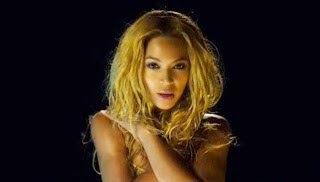
The beginning of the clip begins with a black screen which creates a slow and intimate atmosphere with support of the slow tempo of the music. At 10 seconds of the clip, Beyoncé is presented to the audience in a close up and is captured as an erotic figure, moving slowly and covered in water which can be used to represent sweat. This refers to the idea of sexual intimacy in which her character looks like she has finished her sexual encounter with another male figure. Throughout the video, her lips remained parted which Marjorie Ferguson’s theory of male gaze facial expressions to continue with the sexual theme.

At 44 seconds, Beyoncé tilts her head backwards, closes her eyes with her lips still parted. This suggests that she is thinking of a reality that may not possibly happen. Her facial expressions when she tilts her head suggest this.

 
A few seconds later, Beyoncé is captured in another close up caressing herself to make her look vulnerable and inferior. She is wearing little or nothing at all which implies that her character is prepared to receive sex.

After this, a waterfall special effect is included to create an erotic sexual encounter. This scene opens with a fade-in transition and concludes with a fade-out transition. This extreme close-up shot is supported with slow movements to again refer to the erotic atmosphere.

At one minute, a mid shot is included which now gives the audience an insight into her clothing. Her clothing appears to be a thin night garment that promotes the male gaze theory that women are portrayed to be admired for their appearance. In which Beyoncé is presented to be a character that expresses sexiness. This scene is followed by her taking off her garment. This scene is repeated three times which is due to editing to an erotic sensation.

Following this is in which Beyoncé is wearing no clothes but continues the theme of sex by stroking herself, tilting her head back with her eyes closed. At this point, her lyrics say “Make love to me” which suggests vulnerability of her character. The glittery special effect adds to the sexual theme.

At 1:26, the audience can see a change in the background. This change is from a calm, erotic atmosphere to and creates colourful lively atmosphere. This suggests an advancement in sexual activity. Again her character is stroking herself to increase the intimacy between the character and the audience. She repeats the lyric “Make love to me” to further support the idea of her vulnerability. Her lips continue to be parted with her eyes firmly closed.

At 2:12, a long shot of Beyoncé is displayed wearing leopard print clothing and stockings. The specific types of clothing are resembled with sexiness and are admirable.  Her composition as well as her clothing place emphasis on her to draw in the audience.

At 2:42, a first faint glimpse of a male figure appears, holding Beyoncé. This refers to Laura Mulvey’s male gaze theory of men becoming dominant over women and possess them. So in the clip, the male can be interpreted as possessing Beyoncé. This figure is an element of mystery but can be interpreted as the character’s lover. Later she them tilts and rolls her head around the male figure with her eyes closed to create the intimate atmosphere once again.  

Just after three minutes, Beyoncé is viewed in what looks like to be in a sexual position with the mysterious male figure. These actions can be associated with sexual activity and intimacy. The effects begin to speed up which indicate an uplifting change in tempo and activity of the two characters.


Next follows an extreme close up that captures details of the region of her eyes. This could indicate that she is waking up into reality and was possibly dreaming about something that was not in fact reality. This being the sexual encounter. This shot reinforces the possibility of her character living in a fantasy.

Monday, 8 September 2014

7 Areas of Representation and 4 Areas of Textual Analysis


7 areas of representation:

•Gender
•Age
•Ethnicity
•Sexuality
•Class and status
•Physical ability/disability
•Regional identity

4 Areas of textual analysis:

Camera shots, angle, movement, composition
•Shots: establishing shot, master shot, close-up, mid-shot, long shot, wide show, two-shot, aerial shot, point of view shot, over the should shot, and variations of these.
•Angle: high angle, low angle, canted angle.
•Movement: pan, tilt, track, dolly, crane, steadicam, hand-held, zoom, reverse zoom.
•Composition: framing, rule of thirds, depth of field - deep and shallow focus, focus pulls.

 Editing
Includes transition of image and sound - continuity and non-continuity systems.
•Cutting: shot/reverse shot, eyeline match, graphic match, action match, jump cut, crosscutting, parallel editing, cutaway; insert.
•Other transitions: dissolve, fade-in, fade-out, wipe, superimposition, long take, short take, slow motion, ellipsis and expansion of time, post-production, visual effects.

Sound
•Soundtrack: score, incidental music, themes and stings, ambient sound.
•Diegetic and non-diegetic sound, synchronous/asynchronous sound, sound effects, sound motif, sound bridge, dialogue, voiceover, mode of address/direct address, sound mixing, sound perspective.

Mise-en-Scène
 •Production design: location, studio, set design, costume and makeup, properties.
•Lighting: colour design.